
Launch your podcast with the help of Podzay's powerful tools and community.
Signup on PodzayYou have found the perfect guest for your next episode. They know the topic inside out, their audience overlaps with yours, and you already have three questions you want to ask them. There is just one problem: you cannot find a podcast guest email address anywhere.
This guide shows the practical, respectful ways hosts find a guest’s contact email, how to check that the address is right, and what to send once you have it. It also covers when a direct message on a platform is a better first step than email.
Email is not always the best way to reach a potential guest. Busy experts, authors and founders often receive more email than they can read, and many prefer a short, relevant message in a place they already check. Before you start hunting for an address, ask yourself three questions:
Use the channel the guest has chosen. It shows respect, and it dramatically improves your chances of a reply.
Start with the obvious. Check the contact, about, media, press or speaking pages. Many experts list a dedicated email for media requests or a booking form. Also look in the footer and in any downloadable media kit or one-sheet, which often includes contact details for interviews.
Speakers and authors frequently publish a media kit with a bio, headshots, suggested topics and a booking contact. Search for “[name] media kit” or “[name] speaker” to find it. This is often the most accurate podcast guest contact email because it is maintained specifically for requests like yours.
If your potential guest hosts a podcast themselves, their show’s RSS feed may include an owner contact email. Podcast directories use this field to verify ownership, and many hosting services publish it in the feed. Open the feed URL from the show’s page and look for the owner or email field. Remember that this is usually a show-admin address, so keep your message short and relevant.
LinkedIn profiles sometimes show an email under contact info, especially for consultants and founders. Even when they do not, a concise LinkedIn message can work well. If you go this route, our guide to finding podcast guests covers how to keep the first message brief and specific.
For executives and employees, the company’s press or media page often lists a communications contact. Going through the press team can take longer, but it is the right route for people whose public appearances are managed by their employer.
Look up episodes where the person was a guest. Show notes often include their website, social links and sometimes a direct contact. You can also politely ask a host who interviewed them before whether they would make an introduction. Hosts help each other more often than you might think.
Tools that guess or verify email addresses from a name and company domain can help when you already know where someone works. Treat any result as a guess until it is verified, and never add a found address to a bulk mailing list. Use it for one personal message, nothing more.
Sending to a wrong or outdated address wastes your best opening. Before you hit send:
Finding the address is half the job. The message decides whether you get a yes. A strong podcast guest invitation is short and answers the guest’s real question: “Why should I spend an hour on this?”
Keep it under 200 words. If you do not hear back, one polite follow-up after about a week is reasonable. For full templates and a follow-up sequence, see our guide to podcast guest booking.
Inviting someone to a podcast is a personal, one-to-one message, and it should stay that way. A few principles keep you on the right side of both etiquette and the law:
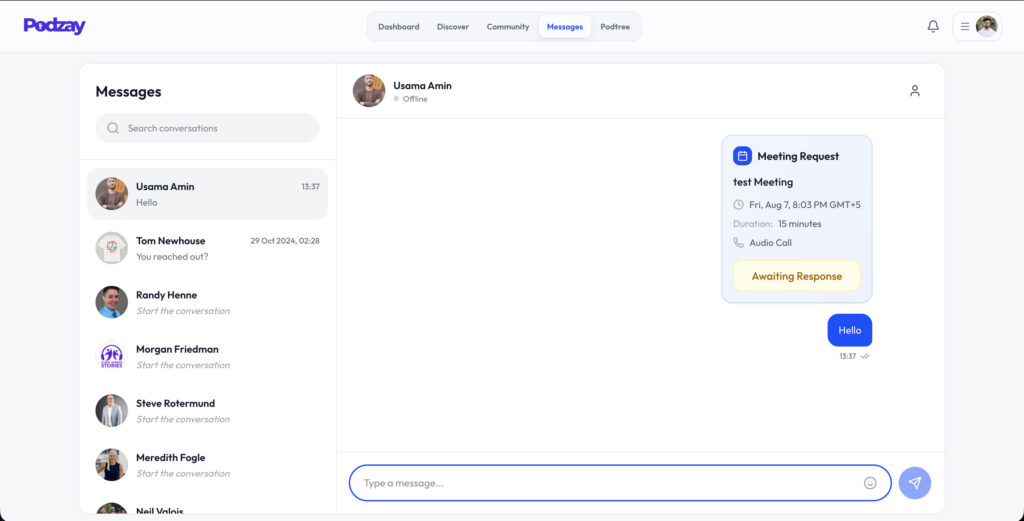
Hunting for contact details takes time, and you can never be sure the person is open to podcast requests. On Podzay, guests create profiles because they want to appear on relevant shows. Hosts can review a guest’s background, topics and any verification status on their profile, message them directly, and arrange the interview, all without searching for an email address.
Podzay is free for everyone who joins during the founding period. Create your host profile and see which guests match your show.
Yes, if the message is personal, relevant to their work and easy to decline. Cold invitations are a normal part of podcasting. Mass, generic emails are what people object to.
Use the channel they make available: a contact form, a LinkedIn message, their publicist, or a profile on a guest platform. You can also ask a mutual contact or a previous host for an introduction.
If they list one for media requests, yes. Representatives handle scheduling and are often quicker to respond than the guest.
About a week is a reasonable gap. Send one short follow-up that adds something useful, such as a sharper episode angle, then move on if there is still no reply.
Connect with fellow podcasters, share your content, and grow your audience with Podzay's comprehensive podcast platform.
Sign Up Now